
What Type of Fence Lasts the Longest? a St. Louis Guide

The popular answer is “wrought iron,” but that advice is incomplete. A fence doesn't fail because a ranking says it should. It fails because water stays against a post, frost heaves a footing, ultraviolet light embrittles a panel, or nobody maintains the finish. In St. Louis County and the surrounding communities, the longest-lasting fence is the one that matches your yard's moisture, sun, soil and your willingness to maintain it.
If you want the raw lifespan champion, choose wrought iron or masonry. If you want the strongest balance of longevity, corrosion resistance, appearance and practical residential use, I'd usually point a St. Charles homeowner toward powder-coated aluminum. If privacy matters more than an ornamental boundary, high-grade vinyl or composite can make more sense. The table below gives you the short version before we get into the failure points and local trade-offs.
Fence Material | Typical Lifespan | Relative Cost | Maintenance Level |
|---|---|---|---|
Wrought iron | 50 to 75 years | High | Moderate |
Powder-coated aluminum | 30 to 50+ years | Medium to high | Low |
Vinyl | 25 to 35 years | Medium | Low |
Composite | 20 to 35 years | Medium to high | Low |
Wood | 10 to 25 years | Low to medium | High |
Galvanized or coated steel | Decades with proper protection | Medium to high | Moderate |
Chain link | Long service life when protected and repaired | Low to medium | Low |
Masonry | Very long service life when properly built | High | Low |
The headline ranges for wrought iron, aluminum, vinyl, composite and wood are documented in this fence material lifespan comparison. The other rows are best treated as design and construction categories rather than promises. Installation quality can move the same material from the bottom of its expected range to the top.
Why There Is No Single Longest-Lasting Fence
Generic fence rankings mislead homeowners because they treat lifespan as a fixed property. It isn't. A poorly installed metal fence can lean, corrode at damaged coating and fail at its gates. A wooden fence in a dry, well-drained yard can outlive a cheaper wood fence installed against wet soil in constant shade.
The clearest example is untreated softwood. Untreated pine or spruce can fail in 4 to 5 years, while cedar can last as long as 30 years under favorable conditions, and treated wood can reach 20 to 40 years with regular sealing, according to this durability comparison by material and installation conditions. Those aren't contradictory figures. They describe different species, treatments, environments and maintenance habits.
The useful question isn't “Which material wins?” It's “Which material fails least often in my yard, with the upkeep I'm actually prepared to do?”
St. Louis-area homeowners have to account for humid summers, wet ground, freeze-thaw movement, strong sunlight and insect pressure. A fence beside a low, shaded area has a different life than one on a sunny, well-drained slope. The same cedar specification can perform very differently depending on how quickly the posts dry after rain and whether soil or mulch stays piled against the bottom boards.
The ranking changes with the yard
Raw lifespan still matters. Wrought iron and masonry sit at the top when the only question is how long the structure can remain serviceable. But raw lifespan isn't the same as value. Wrought iron may require corrosion control and skilled repairs, while masonry demands a larger initial commitment and doesn't provide the same flexible appearance or easy replacement of individual fence components.
For most residential ornamental, boundary and pool-code applications, powder-coated aluminum is my practical long-life choice. It avoids biological rot, resists rust through its oxide layer and protective finish, and doesn't put the homeowner into the same maintenance routine as wood. That doesn't make it right for every privacy installation or every security need.
What this guide will help you decide
The comparison ahead looks at how each material fails, what St. Louis weather does to it, and what workmanship is required to reach the upper end of its service range. It also separates a low purchase price from lifecycle cost per year, including cleaning, staining, hardware replacement and storm repairs.
By the end, you should be able to name your choice in one sentence: “For my yard, my priority is this, so I should use that material.” That's a more useful answer than repeating a national ranking.
How Different Fence Materials Actually Fail
A fence does not reach the end of its service life because a product page lists a number of years. The question is what fails first. In St. Charles and across St. Louis, humidity, freeze-thaw movement, pests, UV exposure, storms, and poor drainage can shorten that timeline. By the time you see the symptom, the underlying damage may have been developing for years.
Wood usually fails through moisture and biological decay. Water enters end grain, joints, and fastener holes, while repeated wetting and drying makes boards and posts move. Rot and fungi attack the fibers, especially around the ground line where soil keeps the post damp. Insects can accelerate the problem. Stain or sealer slows absorption, but it will not save a post installed where water collects year-round.
Vinyl fails through brittleness rather than rot. Long UV exposure can reduce its flexibility, and cold weather makes rigid panels more vulnerable to impact. A fence may look clean while the material weakens, then crack when struck by a branch, ball, lawn equipment, or storm debris. This material failure explanation contrasts wood decay, vinyl embrittlement, and aluminum's resistance to rust.
Corrosion is a protection problem
Steel and wrought iron deliver strength, but moisture corrodes exposed metal once the protective layer breaks down. Scratches, cut ends, standing water, and neglected hardware become starting points. Galvanizing, paint, and powder coating slow corrosion. They still require inspection after storms, impacts, drilling, or other modifications, followed by prompt touch-up work.
Aluminum handles typical residential exposure better. It naturally forms an oxide layer that resists rust, and powder coating adds another barrier against moisture and salt. That combination gives aluminum a long service life with less routine work than painted steel or wrought iron. It remains a poor substitute for a privacy fence where solid screening is the main requirement.
Composite fencing avoids biological rot caused by moisture, but it can still warp or weather at the surface. Lower-grade blends are less forgiving when installation does not allow normal movement. Masonry avoids rot and insects, yet cracking, settlement, and water intrusion can damage walls, columns, and footings.
Failure mode matters more than the label on the sample. Identify the likely weak point, whether it is the wood fiber, coating, fastener, footing, hinge, or panel, then build and maintain the fence around that risk.
Installation can also determine the outcome. Posts lean when footings are shallow or drainage is poor. Gates sag when hinges or gate posts are undersized. Solid panels transfer heavy wind loads to posts, while uneven grades can leave bottom edges exposed to water, soil, and equipment.
A premium material cannot correct careless installation. Proper footing depth, drainage, post placement, and compatible fasteners often matter more than choosing between materials with similar published lifespan ranges. In a St. Louis yard, that workmanship can decide whether the fence delivers its expected life or becomes an early repair bill.
Comparing Fence Material Lifespans and Costs
The fence with the longest published lifespan is not automatically the best buy for a St. Charles homeowner. A 50-year material can be a poor investment if its repair costs, installation demands, or design do not fit the property. A simpler fence that lasts 15 years with manageable repairs may cost less per year than a premium system that lasts 40 years but requires expensive work after every major failure.
Compare more than the number printed on a product page. Look at the purchase category, preservation work, repair difficulty, and the conditions around the fence. Site access, fence height, gates, grading, removal work, and privacy requirements can change the installed quote substantially.
The ranges below use relative cost, not dollar amounts. A basic aluminum ornamental run and a complicated aluminum privacy system are different projects.
Material | Typical Lifespan | Relative Cost | Maintenance Level |
|---|---|---|---|
Pressure-treated wood | 15 to 20 years, with treated wood reaching 20 to 40 years under favorable care | Low to medium | High |
Cedar | Up to 30 years in favorable conditions | Medium to high | High |
Vinyl | 25 to 35 years | Medium | Low |
Powder-coated aluminum | 30 to 50+ years | Medium to high | Low |
Galvanized or coated steel | 20 to 40 years | Medium to high | Moderate |
Wrought iron | 50 to 75 years | High | Moderate |
Composite | 20 to 35 years | Medium to high | Low |
Chain link | Long service life when coating, posts and hardware remain sound | Low to medium | Low |
Masonry | Very long service life when properly designed and built | High | Low to moderate |
The listed ranges for common residential materials come from this wrought iron, aluminum, vinyl, composite and wood lifespan reference. Coatings and corrosion protection strongly affect metal performance, as explained in this technical durability guide. Treat those figures as planning ranges, not promises.
Wood remains the value choice, not the maintenance-free choice
Pressure-treated wood makes sense when privacy matters, the initial budget is limited, or you may not remain in the home for the long term. It is also the easiest material to repair in sections. A damaged board can often be replaced without rebuilding the entire fence.
The trade-off is ongoing labor. Wood needs inspections, clean edges, sound fasteners, and repeated sealing or staining. Cedar offers a warmer appearance and better natural resistance, but moisture can still shorten its service life. In a St. Charles yard, drainage, shade, and the condition of the posts matter as much as the wood species.
Vinyl and composite solve different problems
Vinyl suits homeowners who want privacy without rot, painting, or staining. It washes clean and keeps a consistent appearance, yet a cracked panel or post can be harder to match than a wood board. Cold-weather impact and long-term sun exposure also affect the ownership cost.
Composite usually costs more than basic wood. It fits projects where dimensional stability and a longer period with little routine work matter. Correct spacing and support still count, and lower-grade products can weather or warp. Before buying, ask whether replacement boards are available, how the finish changes over time, and how the system handles normal movement.
Metal earns its premium in the right application
Wrought iron wins the raw longevity contest, but that does not make it the right residential purchase. Its weight, corrosion protection, and skilled repair requirements increase the ownership burden. It earns its price on formal entrances, security-focused boundaries, and properties where the design justifies the expense.
Aluminum is the better balance for many homeowners. It works well for ornamental fencing and pool-code applications where moderate structural loads and corrosion resistance fit the job. Coated steel provides more strength for demanding security work, but damaged protective finishes require prompt attention.
If the initial investment needs to be spread out, review flexible fencing financing options before choosing a cheaper material that may need earlier replacement. Paying more at installation can reduce lifecycle cost when cleaning, staining, hardware replacement and storm repairs are included, a trade-off covered in this wood and vinyl ownership comparison. The right choice is the material that delivers the needed privacy, appearance, and service life at a reasonable cost per year.
What the St. Louis Climate Does to Each Fence
St. Louis weather is hard on fences because it keeps changing the conditions at the material's weakest points. Humidity feeds moisture problems. Summer sun attacks finishes and plastics. Freeze-thaw movement shifts posts and stresses footings. Heavy rain exposes every drainage mistake.
Wood suffers most in wet, shaded locations. A fence behind dense landscaping or beside a low area dries slowly, giving rot more opportunity to develop at posts, rails and board ends. Untreated wood also remains vulnerable to pests, including termites, while stained wood can fade and split when strong sun repeatedly dries the surface.
Yard conditions can reverse the material ranking
A sunny, well-drained yard gives wood a better chance of reaching its upper range. A low-lying yard with heavy moisture can erase that advantage quickly. The ground line deserves special attention because water, soil and organic debris often collect there.
Local reality: A wet, low-lying St. Louis yard changes the ranking. The fence that performs well on a dry slope may be the wrong choice beside a shaded drainage path.
Freeze-thaw cycles create a separate problem. Water enters soil, expands as it freezes and shifts the ground around posts. Repeated movement can leave a fence leaning even when the panels themselves remain sound. Concrete footings can also crack or move when drainage and installation depth are poor.
The practical response is not “buy metal.” It is to control water, use suitable footings and keep the fence clear of soil and mulch. A premium material installed into a poor drainage pattern will still have problems.
Where each material fits locally
Use wood where you want privacy, a traditional look and repairable components, but avoid putting untreated or poorly protected posts in constantly wet ground. Cedar and quality treated wood deserve a maintenance plan from the day they go in, not after the first signs of rot.
Vinyl suits homeowners who want a low-maintenance privacy boundary and have a yard without repeated impact risks. Keep it away from careless equipment use and understand that brittle panels can be harder to repair cleanly.
Composite belongs on the shortlist when you want privacy with less moisture-related maintenance and can accept a higher material cost. Aluminum earns its premium around pools, visible boundaries and damp locations where rust and rot would create recurring work. Wrought iron is appropriate when formal appearance, strength and maximum raw service life justify its cost and upkeep.
Drainage beats wishful thinking
Grade soil away from posts where possible. Keep leaves and mulch from touching the fence. Watch downspouts, irrigation overspray and areas where lawn watering creates standing moisture. A small drainage correction can protect a fence more effectively than upgrading from one midrange material to another.
In St. Louis, climate doesn't select the winner by itself. Moisture exposure, sun, soil movement and maintenance access decide which material lasts.
Installation Quality and Maintenance That Extend Fence Life
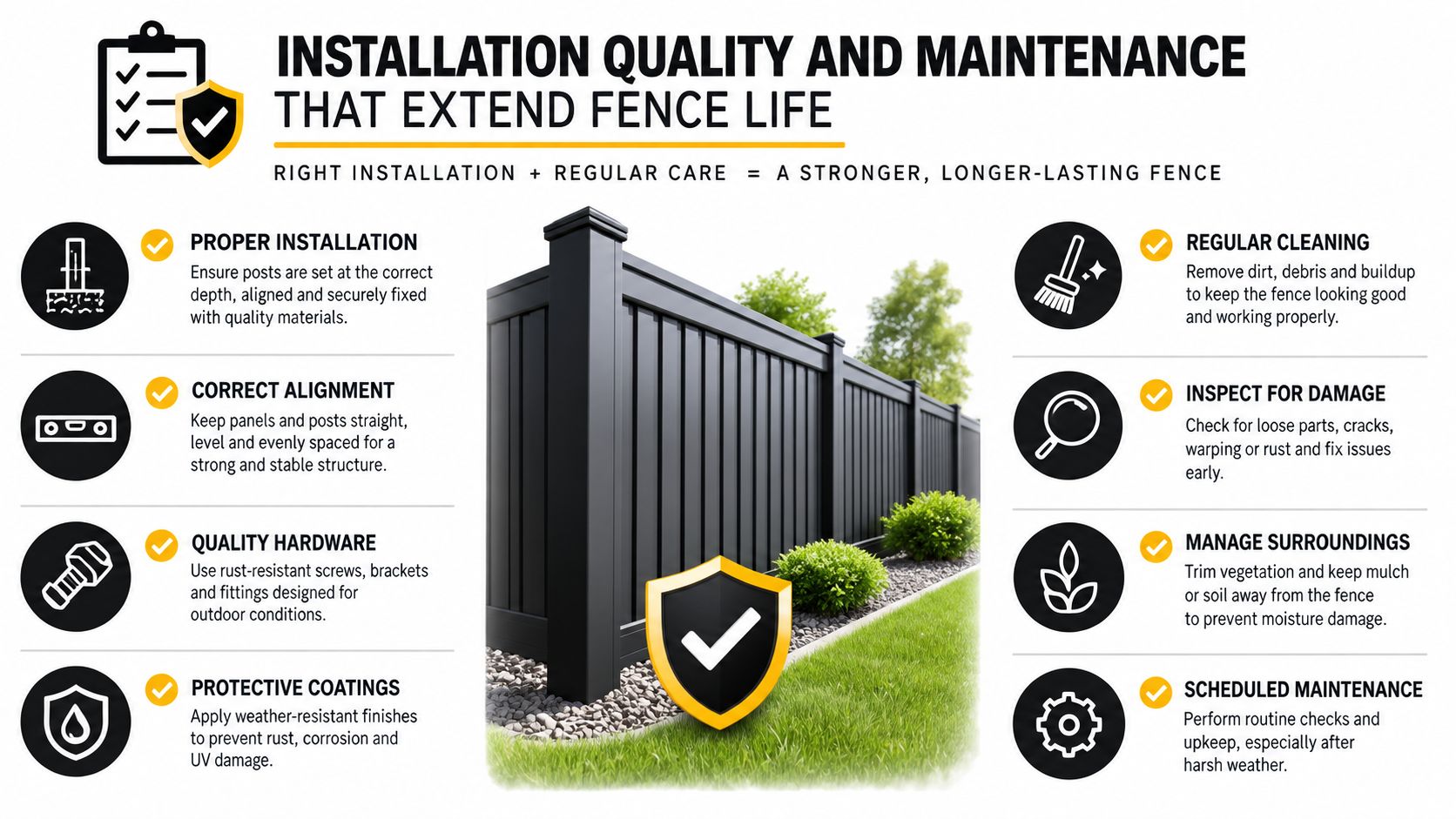
Workmanship decides whether a fence stays straight, drains properly and survives normal weather. I pay more attention to posts, footings and water paths than to decorative caps. A beautiful panel attached to a weak foundation is still a short-lived fence.
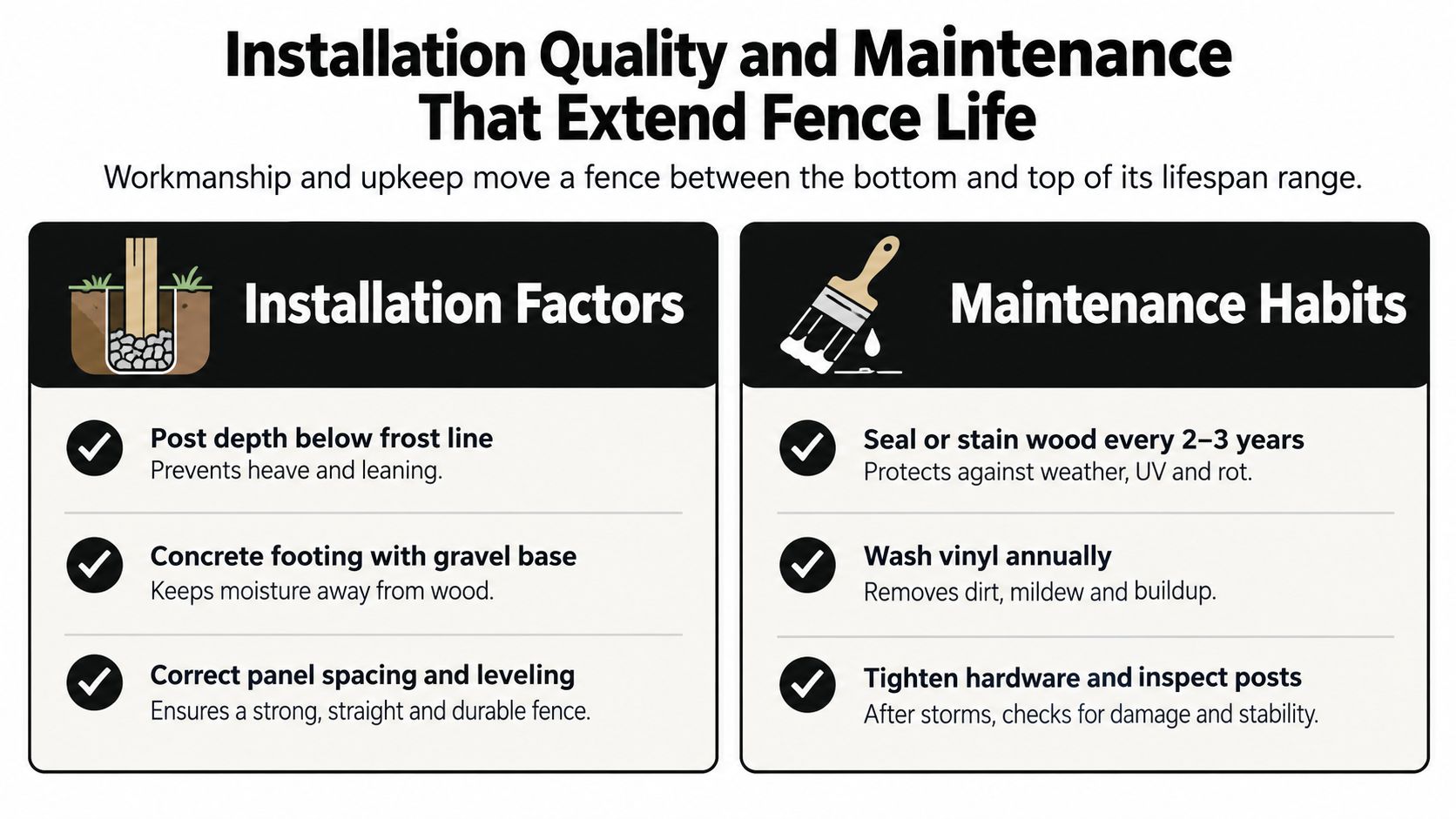
Set posts to an appropriate depth below the local frost line, use sound concrete footings and provide drainage that keeps water from collecting around wood. The footing should support the post without creating a permanent wet pocket. Leveling matters too, especially on slopes where a rushed installation can leave panels twisted or force water toward vulnerable joints.
Use fasteners suited to the material. Poor hardware loosens, stains surrounding surfaces or corrodes at the connection. Keep panel gaps and transitions consistent so the fence can move naturally and shed water instead of trapping it.
A maintenance routine by material
Wood has the most demanding schedule. Seal or stain it every 2 to 3 years to approach the upper end of its expected lifespan, and inspect posts, rails, fasteners and the ground line annually, as advised in this wood, vinyl and composite comparison. Clean vegetation away from the bottom and replace damaged boards before water reaches the framing.
Vinyl needs less routine work, but “low maintenance” doesn't mean “no inspection.” Wash dirt from the surface, look for cracks after cold weather or storms and check gates for stress. A small impact can create a failure that spreads when the panel flexes.
Composite usually needs cleaning and a check for movement, surface weathering or warping. Painted steel and wrought iron need close attention at scratches, welds, hinges and cut edges. Touch up damaged protection before moisture reaches the base metal.
The installation checklist that prevents expensive repairs
Post foundations: Confirm that posts are plumb, adequately supported and protected from standing water.
Ground clearance: Keep wood away from soil, mulch and wet grass so the bottom edge can dry.
Gate hardware: Check hinges, latches and stops because a sagging gate transfers stress into its posts.
Storm inspection: Walk the fence after severe weather and tighten loose hardware before panels begin to move.
Surface care: Wash vinyl and composite, refresh wood protection and repair exposed metal coating.
Vegetation control: Trim branches and vines that hold moisture against panels or add impact during storms.
Ownership rule: Judge a fence by its total cost per year, not just the amount on installation day. Cleaning, staining, hardware replacement and storm repair all belong in the calculation.
A contractor should explain how the design handles your grade, gates, drainage and material movement. If the quote only discusses panel style and ignores post installation, you haven't received a longevity plan. For help with repair work, inspections or related home projects, see local handyman services.
Top Fence Choices by Use Case
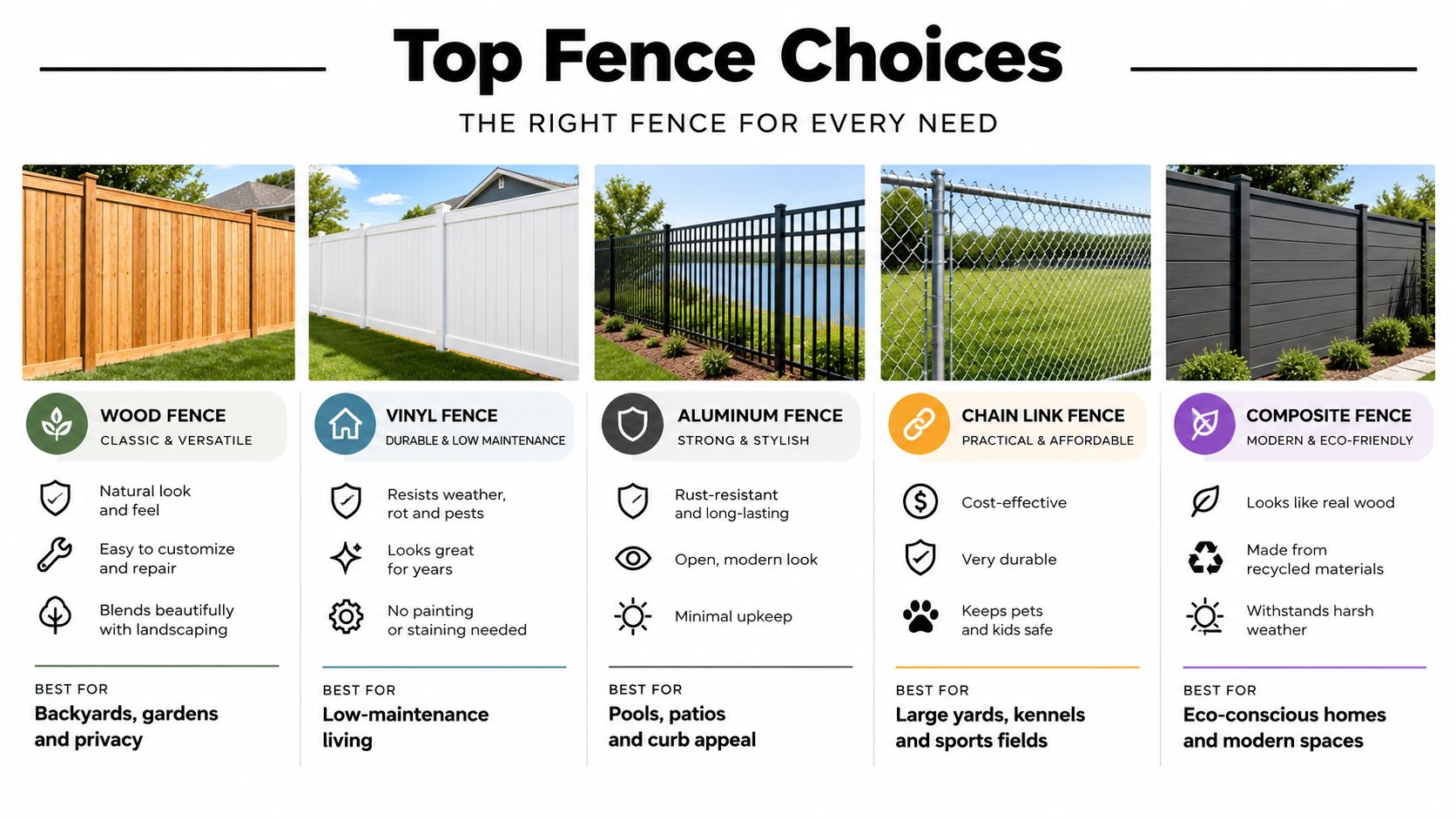
The best fence depends on what you need the boundary to do every day. A privacy fence has different demands from a pool enclosure, and a security fence shouldn't be selected by the same criteria as a decorative front-yard line.
For privacy
My first privacy recommendation is high-grade vinyl when the homeowner wants a consistent appearance and doesn't want a recurring staining routine. It handles moisture better than wood, but choose a quality system and plan for impact protection because brittle panels can crack.
Choose cedar when appearance, repairability and natural character matter more than low maintenance. Choose composite when you want a more stable, maintenance-free surface and can accept a higher initial investment. In a damp, shaded yard, composite or vinyl usually makes more sense than untreated wood.
Pressure-treated wood is still the sensible budget privacy option. It gives you the most flexibility for repairs and modifications, but only if you're willing to maintain it.
For security
Wrought iron and coated steel are the clear leaders when strength and deterrence matter. Wrought iron offers exceptional raw longevity, while steel gives you a practical security-oriented structure with strong resistance when properly protected.
Aluminum is the middle path for homeowners who want an open ornamental design, corrosion resistance and less maintenance. It isn't the choice for every high-security application, but it works well where visibility, appearance and long service life matter more than heavy impact resistance.
For pools and visible boundaries
Use powder-coated aluminum for many pool-code and ornamental applications. It doesn't bring wood rot into a wet area, and its finish helps resist moisture exposure. Confirm the applicable local code and gate requirements before selecting the design.
For a front boundary, proportion matters as much as material. Aluminum and wrought iron provide an open appearance, while vinyl and wood create more visual separation. A fence that looks out of scale with the house can remain technically sound and still feel like the wrong investment.
For low maintenance
Pick aluminum when you want low maintenance with a long expected service life. Pick vinyl when privacy is the priority. Pick composite when you want privacy and a more substantial, stable board system.
None of these materials eliminates inspections. Gates still need adjustment, hardware still loosens and storms still damage fences. Low maintenance means fewer recurring surface treatments, not permission to ignore the installation.
For a limited budget
Pressure-treated wood is not a bad choice when the budget is tight. It becomes a bad choice when a homeowner expects it to behave like aluminum without sealing, inspection or repairs.
Prioritize the foundation, drainage and hardware first. A modest wood design installed correctly is usually a better purchase than premium panels attached to weak posts. If the long-life option is the right one but the timing is difficult, fencing installation and repair services can help you compare a phased project with a full replacement.
Paying more upfront can lower the ownership burden when the replacement interval is longer and the fence needs less cleaning, staining or storm repair. That is why I don't recommend choosing solely by the lowest installation quote.
Fence Longevity Questions Homeowners Ask
Does a longer-lasting fence add resale value?
It can improve buyer confidence, appearance and the impression that the property has been maintained, but don't expect a fence to return its full cost automatically at sale. Buyers notice leaning posts, damaged gates, rot and mismatched repairs immediately. They may not reward a premium material by name, but they will recognize a clean, straight, functional boundary.
For a home going on the market soon, repair obvious failures and improve the gate before replacing every section with the most expensive material available. For a long-term homeowner, lifecycle cost matters more because you'll experience the maintenance and replacement decisions directly.
Does a warranty tell me how long the fence will last?
No. A warranty describes the manufacturer's coverage for defined defects and conditions. It may exclude installation problems, impact damage, improper cleaning, unusual weather or normal color change.
Ask what the warranty covers, who performs the repair, whether labor is included and how replacement parts are matched. A long warranty doesn't make poor drainage acceptable, and a shorter warranty doesn't automatically mean the material is inferior. The installation and the environment still control real-world performance.
When should I repair instead of replace?
Repair when the posts remain sound, the fence line is stable and damage is limited to boards, pickets, hardware or a single panel. Replace when posts are repeatedly leaning, rot has reached structural members, several gates have failed or the fence no longer holds its intended line.
Have someone inspect the ground line before approving a panel-only repair. Replacing visible boards while leaving failing posts usually postpones the larger bill rather than solving the problem. With vinyl and composite, confirm that replacement parts are still available and that the color match will be acceptable.
What should landlords and property managers choose?
Choose the material that reduces service calls without creating an installation cost the property can't support. Chain link and well-installed vinyl can suit properties where containment and straightforward upkeep matter more than privacy aesthetics. Pressure-treated wood can work for budget-sensitive turnovers, but schedule inspections and protect it from ground moisture.
For a long-term rental or a property with repeated tenant damage, use repairable components and sturdy gate hardware. The cheapest fence becomes expensive when managers repeatedly dispatch crews for sagging gates, broken sections and premature replacements. Document the material, installation details and maintenance expectations for whoever oversees the property.
How should St. Charles homeowners make the final call?
Use this simple test:
Choose aluminum for the best all-around long-life balance in ornamental, pool and visible boundary applications.
Choose wrought iron when maximum raw lifespan, strength and formal appearance justify higher ownership demands.
Choose vinyl or composite for privacy with less moisture-driven maintenance than wood.
Choose treated wood or cedar when privacy, repairability, traditional appearance or a lower initial cost matters most.
For a site-specific recommendation, an experienced installer should inspect drainage, grade, gate locations, post conditions and exposure before naming a material. 1st Choice Home Repairs serves St. Charles, O'Fallon, Lake St. Louis, Chesterfield, Wildwood, St. Peters and Ballwin with fence installation, repair and related handyman work. The company offers transparent upfront pricing, flexible financing options and same-week consultations for homeowners who want to make a durable fence decision now rather than postpone it.
If your fence is leaning, rotting at the posts or overdue for replacement, 1st Choice Home Repairs can inspect the site, compare wood, vinyl and metal options, and provide an upfront plan for installation or repair. Contact the team for a same-week consultation and choose the fence that fits your St. Louis yard, maintenance habits and long-term budget.
Comments