
Dryer Service Repair Near Me Fast Local Help

The laundry is sorted, the washer has finished, and then the dryer starts acting up. It may hum without producing heat, leave clothes damp after two cycles, or refuse to start when you press the button. A search for dryer service repair near me usually begins at exactly that frustrating moment, when you need a practical answer rather than a sales pitch.
A few safe checks can reveal whether the problem is a blocked vent, a power issue, a setting, or a fault that needs a trained technician. This guide will also help you judge repair value, understand realistic service costs, and choose local help in St. Charles and nearby communities without guessing.
When Your Dryer Quits Right Before Laundry Day
A dryer failure rarely arrives at a convenient time. A family may be preparing for work and school, a landlord may be turning over a rental, or a homeowner may be getting a property ready for sale. The machine can appear to run normally while clothes remain wet, which makes the problem feel more confusing than a complete shutdown.
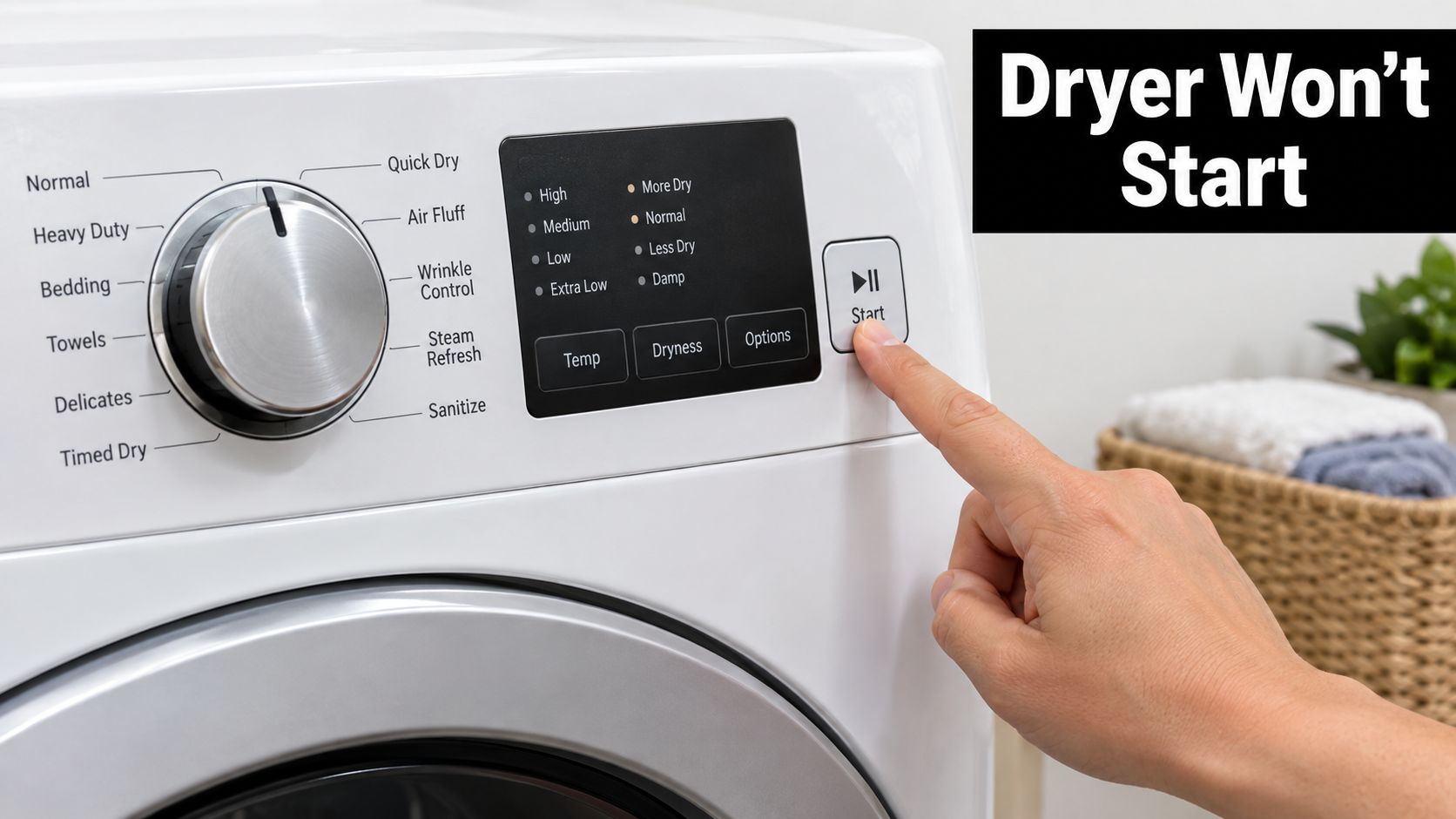
Start with the symptom, not the suspected part. “It won't dry” can describe restricted airflow, a heating problem, an overloaded drum, contaminated moisture sensors, or a cycle selected for a different type of load. “It won't start” may point to power, the door switch, the controls, or an internal electrical fault. Guessing at a replacement part often costs more than describing the behavior carefully.
Write down what happens from the moment you press Start. Does the drum turn? Do you hear a motor hum? Does the cabinet become unusually hot? Can you feel air leaving the outside vent? Does the cycle end quickly while the clothes are still damp? These observations give a technician useful information before the visit begins.
Practical rule: Stop using the dryer if you notice a burning odor, scorching, smoke, repeated tripped breakers, or extreme heat. Those symptoms deserve professional attention rather than repeated test cycles.
A dryer is a repairable household machine, but it combines moving parts, high heat, electricity, and, in gas models, a fuel supply. The safest path is to perform only external checks, then arrange service if the basic causes don't explain the failure. A local provider serving St. Charles, O'Fallon, Lake St. Louis, Chesterfield, Wildwood, St. Peters, Ballwin, and surrounding areas can help you move from a vague symptom to a tested diagnosis.
How Your Dryer Actually Dries Clothes
Think of a dryer as a hair dryer inside a rotating drum. The drum lifts and separates the clothing, a heat source warms the air, a blower moves that air through the load, and the exhaust carries moisture away. If one part of that sequence weakens, the machine may still appear to work while drying performance falls sharply.
Heat generation
Electric dryers use a heating element, while gas models use a burner system. The heat must cycle on and off rather than remain constant, because the control system is trying to dry fabric without creating unsafe temperatures. A failed heating component can leave the drum turning with little or no warmth.
Heat alone doesn't solve the problem. If hot, damp air can't leave the drum, the load may dry slowly and the cabinet may become hotter than expected. That's why replacing a heating part without checking ventilation can miss the actual cause.
Airflow and venting
The blower pulls air through the drum and pushes it toward the exhaust. The path includes the lint screen area, internal passages, blower region, transition from the dryer to the wall, and the exhaust connection. Lint can collect in more than one location, so a clean screen doesn't prove that the whole route is clear.
The dryer doesn't simply need heat. It needs a steady exchange of warm air entering and moist air leaving.
Tumbling action
The drum's rotation keeps wet fabric from forming a dense bundle. A belt transfers motor power to the drum, while rollers, glides, and an idler support smooth movement. A worn belt may cause a drum that doesn't turn, while damaged support parts can create squealing, scraping, or thumping.
Moisture sensing
Automatic cycles use sensor bars to estimate when clothing has reached the selected dryness level. Residue from dryer sheets, lint, or fabric products can interfere with the contact between the clothing and the bars. Poor airflow can also imitate a sensor fault because the load doesn't reach the expected dryness threshold.
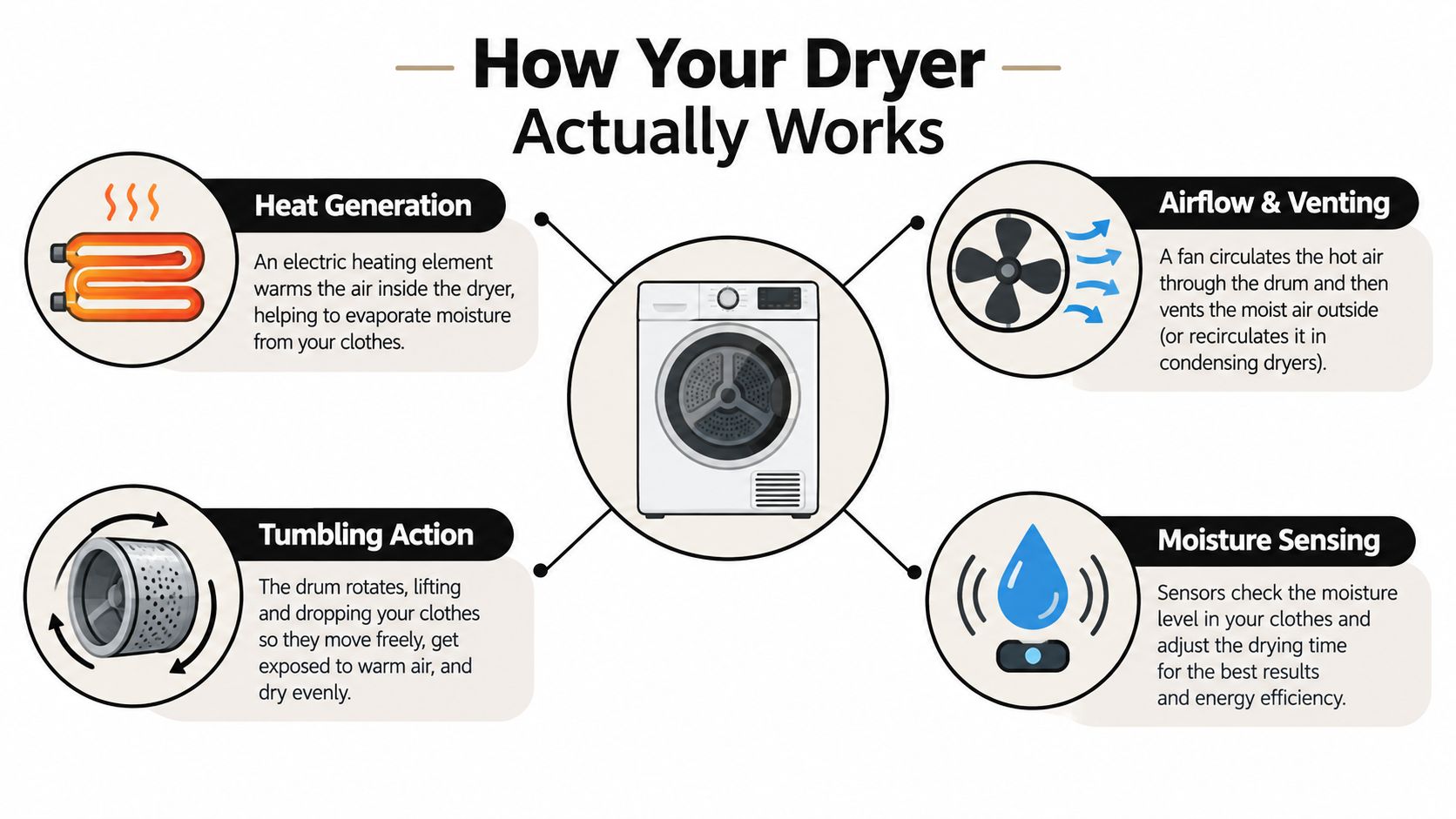
Understanding these four systems makes troubleshooting less mysterious. A dryer that turns but doesn't dry may have a ventilation issue rather than a dead motor. A machine that stops early may need clean sensor bars or a clear exhaust path rather than a new control board.
Most Common Dryer Problems and What They Mean
Laundry day is tomorrow, and the dryer starts but leaves every load damp. The symptom is frustrating, but it also provides a useful starting point. In one large U.S. dataset covering 51,435 service visits, dryers represented 9.4% of appliance repair calls. The same repair-industry summary places average dryer lifespan at 12 to 13 years. The repair-industry data summarized by WorldMetrics
Use the symptom as a clue
The dryer runs but clothes stay damp. Restricted airflow, a blocked exhaust route, a weak heat source, a clogged blower path, or contaminated sensor bars can cause this pattern. Compare the current cycle with the usual drying time. Notice whether the cabinet feels unusually hot or the exterior vent releases only a weak stream of air. These signs help separate an airflow problem from a heating or sensing fault.
The drum turns but there is no heat. The heating element, thermal fuse, thermostat, burner ignition system, or control circuit may require testing. Gas models also contain ignition and fuel-related components. Leave the covers closed and have a technician inspect them rather than attempting burner work yourself.
The dryer won't start. Begin with the outlet and breaker. If power reaches the appliance, the door switch, start control, motor, thermal fuse, or electronic controls may be involved. A completely silent dryer points toward an operating or electrical fault, while a brief click can indicate that a safety switch or control is stopping the cycle.
The drum doesn't spin. A broken belt, seized roller, damaged idler, or motor problem can stop rotation. A motor that hums without turning may be struggling with a mechanical obstruction or internal fault. Electrical diagnosis belongs with a qualified technician.
The cabinet overheats or a burning smell appears. A restricted exhaust path, lint inside the cabinet, a slipping belt, or an electrical fault can create dangerous heat and odor. Turn the dryer off and stop testing it until the cause is checked.
The dryer makes a new noise. Squeals often indicate wear in support or tension parts. Thumps may come from rollers or drum components. Scraping, grinding, or a sharp electrical smell calls for prompt service.
Age helps with the repair-versus-replace decision, but it does not decide it alone. An older dryer with one replaceable fault may be worth repairing. A newer appliance with repeated failures deserves a broader cost comparison, including the repair, likely future work, and the condition of the rest of the machine.
Safe DIY Checks to Try Before You Call for Service
Begin with checks that don't require removing panels, handling wiring, or opening a gas system. You're gathering clues, not attempting a component repair. If a check requires a multimeter, access behind the cabinet, or contact with a gas connection, stop and schedule service.
Start with power and the door
Confirm that the dryer is firmly plugged in and that the breaker hasn't tripped. Electric dryers may have separate circuits for their operating controls and heating function, so a partial power issue can create a machine that runs without heating. Reset a tripped breaker only once. If it trips again, leave the dryer off.
Close the door firmly and check for clothing caught in the latch area. The door switch prevents operation when the door isn't recognized as closed. Don't bypass the switch, even temporarily.
Check the airflow path
Clean the lint screen and inspect the housing where it slides into the dryer. Then look behind the appliance for a crushed or sharply kinked transition duct. At the exterior termination, confirm that the flap opens while the dryer runs and that air feels reasonably strong.
Restricted airflow is a high-confidence cause of many dryer calls because lint can collect in the blower area, internal air passages, dryer-to-wall transition, and exhaust connection, not only on the screen. This technician-oriented dryer airflow guidance explains why a clean lint filter doesn't rule out a deeper ventilation restriction.
Compare four clues, the usual drying time, cabinet heat, odor, and airflow outside. Long cycles combined with high heat and weak exterior airflow point toward ventilation trouble. Don't push a vacuum or rigid object deep into an inaccessible duct, and don't dismantle the dryer to reach internal lint.
Clean the sensor area and confirm the setting
If an automatic cycle ends early, wipe the moisture sensor bars with a soft cloth. Remove residue without scraping the bars or applying harsh chemicals. Check that the selected cycle matches the load, and try a timed cycle only as a diagnostic comparison, not as a workaround for overheating or a burning smell.
Moisture-sensor complaints often come from contamination or airflow problems rather than a failed sensor. Appliance Repair Academy's diagnostic guidance recommends cleaning the sensor bars, checking the lint screen housing, and testing the vent path before replacing parts.
For broader household appliance support, you can review 1st Choice Home Repairs' laundry services. Book a technician if these checks don't identify the issue, if the dryer overheats, or if you see damaged wiring, exposed components, smoke, or signs of gas trouble.
Repair or Replace and What Dryer Service Really Costs
A dryer can fail on the worst laundry day, yet the first estimate does not always determine the best choice. Start with the dryer's age, maintenance history, failure type, and past reliability. One blocked airflow path or replaceable wear part may support repair. Several unrelated breakdowns suggest that replacement could provide better value.
Consumer Reports data summarized by ConsumerAffairs places median repair costs between $116 and $200 for gas dryers and $118 and $188 for electric dryers, depending on the dryer's price tier. A service price is like a medical visit for the machine: the diagnosis comes first, then labor, parts, access, taxes, and any return visit shape the final bill. Ask the technician to separate those items clearly.
Before approving work, confirm whether the company charges a diagnostic or service-call fee and whether that fee is applied to an approved repair. Request a written explanation of the fault and estimate. A low advertised starting price may leave out the work needed to complete the repair.
A practical decision table
Decision Factor | Repair Makes Sense | Replace Makes Sense |
|---|---|---|
Age | The dryer is well below its typical service life and has been dependable. | The dryer is around or beyond its typical service life and has several age-related symptoms. |
Fault | The technician identifies one contained, testable problem. | The diagnosis reveals several failing systems or extensive internal damage. |
Cost | The estimate fits your budget and leaves the machine in sound condition. | The repair approaches the cost of a suitable replacement or provides limited value. |
Reliability | This is an isolated failure with no pattern of repeat service. | The appliance has required repeated repairs or regularly disrupted laundry. |
Timing | Same-week service restores a machine you otherwise like. | A replacement is readily available and avoids continued downtime. |
Consumer remedy | The manufacturer or retailer responds with a reasonable repair path. | If a manufacturer or retailer has delayed repair for more than two weeks, replacement or refund escalation may become the smarter route, as discussed in this consumer repair and refund guide. |
Financing may help when the repair is urgent and the household budget is tight. Ask about interest, payment timing, and total cost before approving work. If you request a local quote, also check that the technician explains the diagnosis, names the parts involved, and states what the repair covers. The goal is dependable laundry service at a cost you understand, whether that means repairing the current dryer or replacing it.
Why Local Same Week Service Matters in St Charles and Nearby Cities
A dryer that stops working before laundry day creates more than an inconvenience. A local technician can examine the full system, including electrical supply, airflow, heat, drum movement, controls, and installation condition. These parts work like links in one chain. A restriction in the vent, for example, can make a heating problem appear worse than it is. Proper diagnosis requires appliance knowledge, not just general handyman skills.
The appliance repair field is substantial. Industry reporting estimates appliance repair revenue at about $6.3 billion in 2023 and the broader U.S. appliance repair market at about $7.4 billion in 2026. Workforce data also report 29,950 home appliance repairers employed in May 2023, with an average annual wage of $50,640. These figures, including the future-year estimate, appear in ConsumerAffairs' market overview.
For homeowners in St. Charles and nearby cities, proximity can shorten the disruption. A local provider may offer a more workable appointment window and recognize common layouts in area homes. Same-week service also helps landlords coordinate tenant access and sellers prepare a property for showings without leaving a laundry problem unresolved.
1st Choice Home Repairs serves St. Charles, O'Fallon, Lake St. Louis, Chesterfield, Wildwood, St. Peters, Ballwin, and nearby communities. The company describes 25 years of hands-on experience, washer and dryer repair, transparent communication, fair upfront pricing, and flexible financing. Review its broader home repair and appliance service options before deciding whether its services suit your property.
Questions to ask before booking
Licensing and insurance: Ask which credentials and coverage apply to the work in your home.
Written pricing: Confirm the service-call fee, diagnostic terms, labor, parts, taxes, and possible return-visit charges.
Relevant experience: Ask whether the technician services your dryer's brand and gas or electric configuration.
Workmanship warranty: Verify the coverage period in writing. Consumer marketplace guidance commonly discusses warranties ranging from 30 to 90 days, as reflected in Thumbtack's appliance repair hiring guidance.
Wait time and access: Request the earliest realistic appointment and ask how long diagnosis or parts ordering may take.
References and reviews: Check independent consumer resources, references, or BBB-style records instead of relying only on company testimonials.
A trustworthy technician should explain what failed, why the proposed repair addresses it, and how to reduce the chance of a repeat problem. You should receive enough detail to approve the work without pressure.
Book Your Dryer Service Repair Near Me Today
You now have a useful way to sort the urgency. Check power, the door, the lint screen, the visible transition duct, the exterior exhaust, and the sensor bars when those checks are safe. Record the symptom, avoid using the machine when it overheats or smells burned, and compare repair value against age and reliability rather than reacting to the first estimate.
Before you contact a technician, locate the model number and note whether the dryer is gas or electric. Include what changed, whether the drum turns, whether heat is present, how long cycles take, and whether the outside vent has strong airflow. These details help the company schedule the right type of visit and prepare for a more focused diagnosis.
Homeowners can book through 1st Choice Home Repairs' contact page. The company serves local communities around St. Charles and offers appliance repair alongside other home services, with attention to communication, upfront pricing, flexible financing, and minimizing household downtime.
Landlords should mention tenant access requirements and whether the appliance is part of a rental turnover. Sellers can request attention to any related laundry-area concerns before showings, while busy families can ask about same-week availability and the expected next step if a part isn't immediately available.
A clear symptom, a safe first check, and a written estimate turn a stressful breakdown into a manageable home repair decision.
1st Choice Home Repairs provides local washer and dryer repair for homeowners, landlords, and sellers who need practical diagnosis and dependable scheduling in the St. Charles area. Visit 1st Choice Home Repairs to request service, discuss your dryer symptoms, and take the next step toward restoring your laundry routine.
Comments