
Dryer Appliance Repair Near Me: St. Charles Expert Guide

A dryer repair averages $209 nationally, with typical median costs ranging from $118 to $200, depending on the dryer and repair. Since 95% of American homeowners have experienced a major appliance breakdown, finding dependable dryer appliance repair near you is a routine part of responsible home maintenance, not a rare household disaster.
The problem usually starts in the middle of an ordinary week. A load of towels sits damp in the drum, the dryer runs without producing heat, or the machine stops completely after a few minutes. In a St. Charles home, that disruption can affect work clothes, school uniforms, rental turnovers, and the next load waiting beside the washer.
Before assuming a major component has failed, check the airflow. Lint buildup, a crushed transition duct, or a blocked exterior vent can make a healthy dryer overheat and shut itself down. A good local technician should diagnose the dryer and the vent path, explain the repair clearly, and help you decide whether fixing the appliance still makes financial sense.
Why Dryer Appliance Repair Near Me Matters Right Now
A midweek dryer failure creates a very specific kind of stress. The washer finishes, the clothes come out heavy and wet, and the dryer either blows cold air or stays silent. Someone needs clean work clothes the next morning, a landlord needs a unit ready for a tenant, or a family has to consider hauling laundry elsewhere.
That frustration doesn't mean you neglected the appliance. Major appliance breakdowns are common in American homes. Research summarized in the National Appliance Repair Report found that 95% of American homeowners have experienced a major appliance breakdown. Dryer service belongs in the same category as plumbing maintenance or furnace troubleshooting, a practical homeownership responsibility that occasionally needs professional attention.
A repair is usually a manageable household decision
The same report places the average U.S. dryer repair at about $209, slightly below the average washing machine repair at $221. Consumer Reports found median dryer repair costs between $118 and $200, with the amount varying by whether the unit is electric or gas and by its price tier, as described in its dryer repair and replacement guidance.
Those figures don't predict the price of your particular service call. A technician still needs to identify the failed part, inspect the venting, and account for access and installation. They do show why a dryer problem shouldn't automatically trigger a replacement purchase. Many repairs fall into a mid-range household expense rather than the financial category of a major renovation.
Practical rule: Treat the first visit as a diagnosis, not an automatic part replacement. The right question is what caused the symptom and whether the total repair remains sensible for the appliance.
Local response matters
A national average can't tell you how quickly a technician can reach a St. Charles home, whether the company works on your brand, or whether the provider explains the price before starting. Local service matters because a delayed dryer repair can become a larger scheduling problem for families, landlords, and property managers.
When you search for dryer appliance repair near me, look beyond a page that promises a fast fix. Choose a provider that checks the appliance and the home's exhaust path, communicates the findings in plain language, and gives you a clear choice between repair and replacement.
The Hidden Culprit Behind Most Dryer Failures
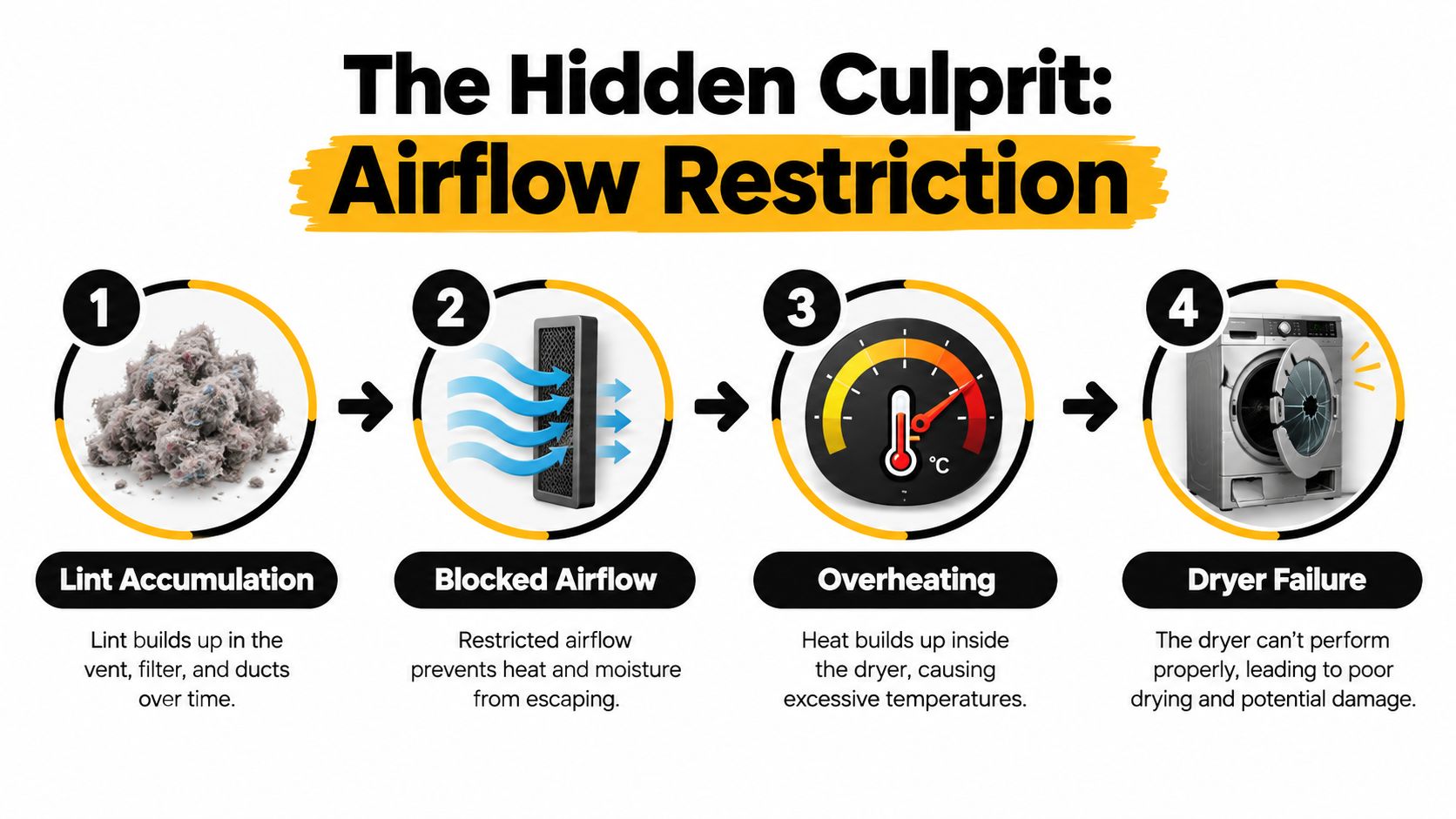
A St. Charles homeowner may call because the dryer “isn't heating” after a load takes far too long to finish. The first inspection should follow the air, because restricted exhaust can create the conditions that make a heating component appear to fail.
Lint collects beyond the screen. It can build up in the lint-screen housing, transition duct, blower area, and exterior vent. As those passages narrow, less hot, moist air leaves the cabinet. Drying time increases, heat recirculates, internal temperatures rise, and safety devices may shut the dryer down.
Why the thermal fuse can mislead you
A thermal fuse opens the circuit when the dryer overheats. Fix.com's thermal-fuse repair guidance recommends checking fuse continuity with a multimeter, then examining the lint-screen housing, blower housing, flexible duct, and outside vent for crushed, kinked, or lint-packed passages.
That order matters. A blown fuse shows that the dryer has experienced excessive heat. Replacing it may restore operation for a short time, yet the same restriction can trigger another shutdown. The fuse may be the failed part, while the airflow problem caused the overheating.
A fuse test also has a safety limit. Testing continuity is reasonable for someone familiar with a multimeter and a disconnected appliance. Bypassing the fuse or repeatedly replacing it without finding the heat source creates a serious fire risk and calls for professional service.
What a proper airflow inspection includes
A technician should trace the route from the drum to the outdoors:
Lint-screen housing: Lint can pack below or around the housing even when the screen looks clean.
Blower housing: Debris near the blower wheel can reduce air movement and extend drying time.
Transition duct: A flexible duct may kink or collapse when the dryer sits too close to the wall.
Exterior vent hood: The flap should open during operation. Lint, nests, and outdoor debris can block the outlet.
Vent installation: Excessive bends and poor routing make it harder for moist air to escape.
Maytag's dryer-heating guidance recommends checking vent installation, vacuuming the vent path, cleaning the exterior hood, and maintaining vent cleaning every one to two years. The right interval depends on the home, vent length, usage, and lint conditions. Before replacing a heating element or burner, confirm that the dryer can move air safely through the complete exhaust system.
Simple Troubleshooting Steps You Can Do Today
Start with checks that don't require opening the electrical cabinet or handling gas connections. Disconnect the dryer from power before cleaning around the appliance, and don't continue operating it if you smell gas, see scorched wiring, or notice unusual smoke.
Follow the exhaust path
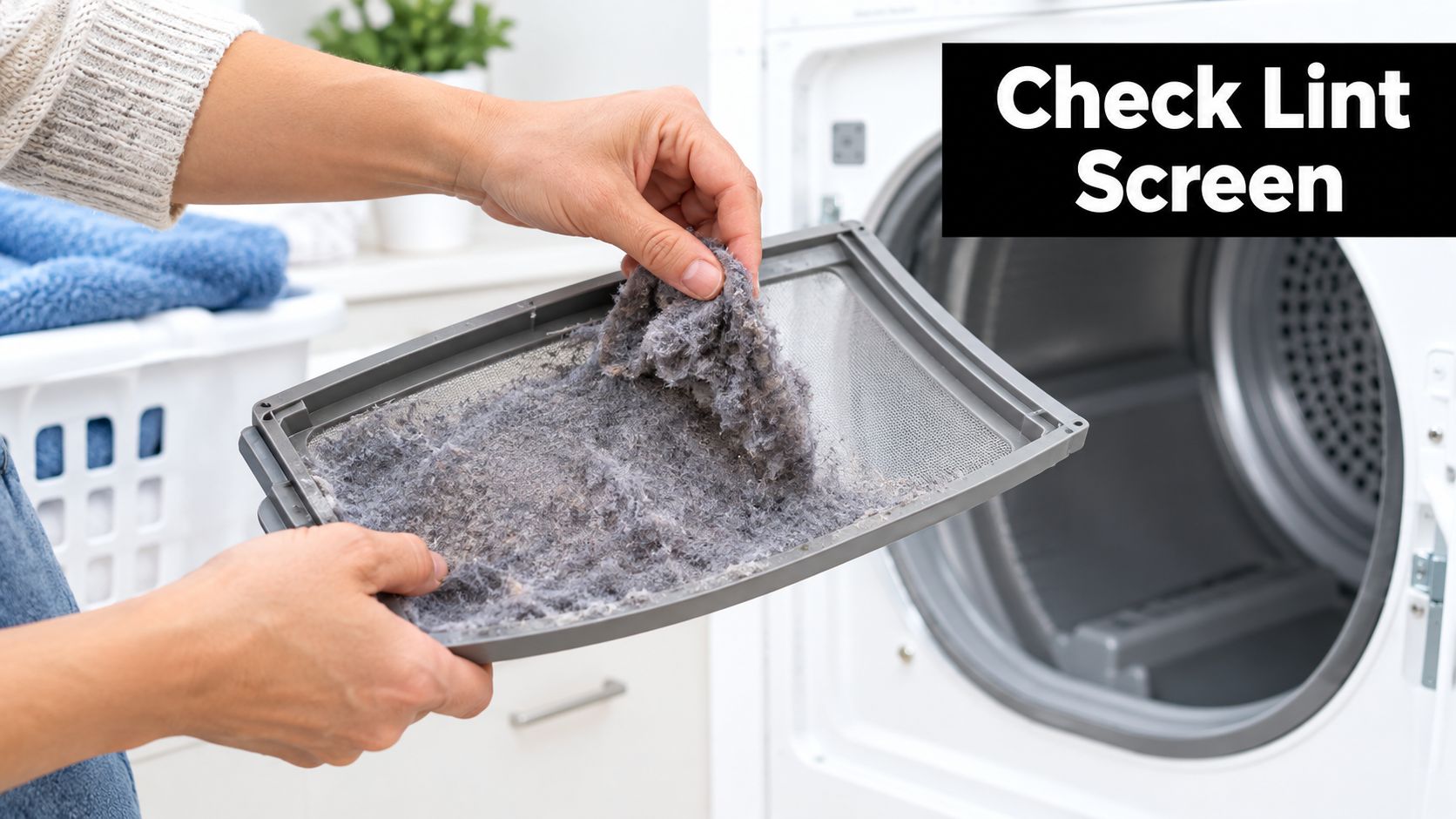
Clean the lint screen. Remove visible lint and wash the screen if fabric-softener residue has created a coating. Let it dry fully before reinstalling it. A coated screen can restrict air even when it appears mostly clear.
Inspect the screen housing. Use a flashlight to look below the filter opening. A narrow vacuum attachment can remove loose lint within reach. Don't force tools deep into the housing or damage internal components.
Check the flexible duct. Pull the dryer forward carefully and look for a crushed section, sharp kink, or heavy lint accumulation. A smooth, properly supported route allows air to leave the cabinet instead of forcing heat back toward the appliance.
Test the outside flap. With the dryer running briefly, confirm that the exterior vent flap opens and that you can feel air moving outside. Stop the test if the dryer smells hot or produces a burning odor.
Clean accessible debris. Remove lint around the exterior hood and floor area. If the duct disappears into a wall or ceiling, don't try to improvise a deep cleaning with a rigid object.
Know where DIY stops
These steps can identify an obvious restriction, but they won't diagnose every fault. A dryer that still runs cold, shuts down, trips a breaker, makes grinding noises, or refuses to start may have an electrical, mechanical, or control problem.
Don't bypass a thermal fuse, door switch, or other safety device. Don't test live electrical components unless you're trained and equipped to do so. A multimeter can verify continuity, but interpreting the result and finding the reason for a failure requires more than swapping a part.
If cleaning the accessible airflow path doesn't change the symptom, stop guessing. Repeated part replacement costs more than a correct diagnosis and can leave the original hazard in place.
Repair vs. Replace Making the Smart Financial Decision
A dryer that stops heating is not automatically a replacement candidate. First separate an airflow restriction from a failed component, then compare the appliance's condition, service history, and likely repair path with the cost and disruption of replacing it.
As noted earlier, median repair costs range from $118 to $200, with the national average around $209. Use those figures as reference points, not as a quote for a St. Charles home. The final cost depends on the model, access, diagnosis, labor, and whether the vent problem caused additional damage.
When repair usually deserves serious consideration
Repair is usually the sound starting point when the dryer has been reliable, the failure is isolated, and testing identifies a specific cause. A restricted vent, worn belt, failed thermal fuse, or similar targeted issue may be reasonable to correct, especially when the cabinet, drum, and motor remain in good condition.
Airflow deserves attention before any major decision. If clothes take too long to dry and the outside flap barely moves, correcting the vent may solve the complaint without replacing a part or the appliance. Replacing a dryer while leaving a blocked exhaust route in place only recreates the same problem.
Age matters, but it does not decide the case by itself. A newer dryer with one repairable fault can make more financial sense than an older unit that has already required repeated service.
When replacement may be more rational
Replacement becomes more reasonable when failures keep returning, the motor or control board is failing, the drum or cabinet is badly damaged, or repair costs are accumulating. Include the diagnostic charge, labor, downtime, and possibility of another worn component failing soon. A low part price does not make a poor repair candidate economical.
Situation | More practical starting point |
|---|---|
One clear fault on a reliable dryer | Obtain a repair diagnosis |
Poor drying caused by vent restriction | Correct the airflow before replacing parts |
Repeated service calls | Compare total repair cost with replacement |
Major motor or control problem on an aging unit | Request both repair and replacement guidance |
Unsafe gas or electrical condition | Stop using the dryer and call a qualified professional |
If spreading the cost would affect the decision, review available financing options before approving work or shopping for a replacement. Financing can help address a safety issue promptly, but it does not make an uneconomical repair financially sound.
Ask the technician to separate the immediate repair from recommendations that can wait. That keeps the decision tied to the dryer's actual condition rather than pressure from one large estimate.
When to Call a Professional Appliance Repair Technician
DIY cleaning is reasonable when the problem is visible and accessible. Professional service becomes the smart choice when the diagnosis involves gas, live electrical circuits, hidden vent sections, or a failure that returns after basic maintenance.
Gas dryers require particular caution. If you smell gas, stop using the appliance, avoid creating sparks, and contact a qualified technician. Don't disconnect gas fittings or attempt burner repairs based only on an online symptom list. A technician can check the ignition sequence, gas supply, safety components, and exhaust conditions as a system.
Electrical symptoms also need respect. A dryer that trips a breaker, shows scorched terminals, smells like burning plastic, or has damaged wiring shouldn't be operated until someone qualified inspects it. Unplugging the appliance is a sensible first step, but it doesn't make internal electrical diagnosis safe for everyone.
The right technician diagnoses causes, not just complaints
A customer may report “no heat,” but that phrase can describe blocked airflow, a failed thermal fuse, a heating element, a burner problem, a thermostat issue, a motor fault, or a control problem. A competent visit should connect the symptom to a test result and then check why the failure occurred.
Look for a provider that can:
Verify the complaint: Confirm whether the drum turns, whether heat develops, and whether the dryer shuts down.
Inspect the exhaust system: Check the lint path, duct, exterior hood, and airflow restrictions.
Test components: Use appropriate electrical tests rather than guessing from appearance.
Explain the options: Separate urgent safety work from repairs that can wait.
Document the recommendation: Give you enough information to compare repair and replacement fairly.
For St. Charles homeowners, 1st Choice Home Repairs is one local option for appliance service. The company states that it has 25 years of hands-on experience and provides washer and dryer repair, along with other home services. Experience doesn't replace a proper diagnosis, but a technician who understands both appliance components and home venting can reduce the chance of treating only the symptom.
Same-week service has practical value when laundry is already backing up, a rental unit is vacant, or a household depends on one machine. Speed should never replace safety, though. The best appointment is the one that identifies the fault and leaves the dryer operating within safe conditions.
What to Expect from Local Same-Week Service
A professional repair visit should feel predictable from the first phone call. You describe the symptom, provide the brand and model if available, explain whether the dryer is electric or gas, and mention any unusual noise, smell, breaker trip, or shutdown behavior.
The provider should then explain the scheduling window and what happens during diagnosis. Same-week availability can reduce disruption, but ask whether the company offers a defined appointment window and whether diagnostic or service charges are explained before the visit.
A transparent visit has four parts
Scheduling: Give the office the exact symptom and appliance details. “It doesn't dry” is less useful than “the drum turns, the clothes stay damp, and the exterior flap barely moves.”
Diagnosis: The technician examines operation, airflow, safety controls, and likely component faults. They should distinguish a vent problem from an appliance problem.
Pricing: You receive the repair recommendation and cost before authorized work begins. If replacement is more sensible, the technician should explain why rather than treating every issue as a repair opportunity.
Completion: The technician performs the approved work, tests the dryer, and explains any maintenance needed to prevent a repeat failure.
You can review the provider's listed appliance repair services before scheduling to confirm that dryer service fits the company's scope. Ask about workmanship warranties, parts coverage, and what happens if the original symptom returns. Those details matter more than a vague promise of a fast fix.
For landlords and property managers, request a written summary of the diagnosis and completed work. For homeowners, keep the same information with appliance manuals and receipts. A clear record helps with future decisions and prevents another technician from starting the investigation from zero.
Financing may also be relevant when the diagnosis leads to a necessary replacement or a larger home repair. It should support a decision you've already evaluated, not pressure you into accepting work you don't understand.
Scheduling Your Dryer Repair in St. Charles and Nearby
Laundry rarely waits for a convenient repair appointment. A St. Charles homeowner may be restarting the dryer, a landlord may have a tenant waiting, or a family may be managing damp clothes with a backup machine. Stop using the appliance if it overheats, smells of gas, or shows electrical damage.
Before contacting a local provider, gather the brand, model, fuel type, and exact symptom. Record whether the drum turns, whether the dryer produces heat, whether it shuts off during a cycle, and whether you have cleaned the lint screen or checked the exterior vent flap. Specific observations help the technician prepare and reduce guesswork during the visit.
1st Choice Home Repairs serves St. Charles, O'Fallon, Lake St. Louis, Chesterfield, Wildwood, St. Peters, Ballwin, and nearby communities. Its home repair offering includes appliance work, along with stated financing options, workmanship warranties, and upfront communication. Confirm current availability, pricing, and warranty terms when booking.
A useful appointment should clarify four points: whether the dryer is safe to operate, whether the vent system is contributing to the symptom, which work is approved, and whether continued ownership makes financial sense. A repair recommendation should include the expected result and any maintenance needed afterward.
For service details, use the company's contact page and describe the failure before the appointment. If you notice a gas odor, damaged wiring, scorching, or overheating, stop using the dryer and report the safety concern immediately.
This short video provides additional context on appliance service expectations before scheduling:
A technician who tests airflow before ordering parts helps homeowners avoid unnecessary expenses and recurring breakdowns. Clear advice about repair versus replacement also matters when an older dryer has become unreliable. That is the standard to look for when arranging dryer appliance repair near St. Charles.
If your dryer blows cold air, takes too long, shuts down, or shows an airflow, gas, or electrical problem, request a diagnosis through the service page. Describe the symptom, ask what the visit includes, and schedule a clear next step before the laundry backlog grows.
Comments