
Cost of Wall Painting Explained for St. Louis Homes

Walls-only interior painting commonly costs about $2.75 per square foot, while a full interior project with walls, trim, and ceilings averages about $4.70 per square foot. A typical interior painting project averages roughly $2,022, with common totals ranging from about $965 to $3,089 (Angi's interior painting cost guide).
You may be standing in your living room right now, comparing a tired wall color with a fresh sample and wondering why one painter quoted several hundred dollars more than another. The difference usually isn't a mistake. One estimate may cover walls only, while the other includes repairs, primer, ceilings, trim, extra coats, and cleanup.
The cost of wall painting makes more sense once you separate the wall itself from everything required to produce a clean, durable finish. A home in St. Charles, O'Fallon, Lake St. Louis, St. Peters, Chesterfield, Wildwood, or Ballwin may have similar room dimensions to a neighboring home, yet require a different amount of sanding, patching, masking, ladder work, or specialty paint.
Why Wall Painting Quotes Vary So Much
A homeowner in St. Charles County may ask for a living room repaint and receive two very different totals. One painter may price a quick walls-only refresh over smooth drywall. Another may include ceiling coverage, baseboards, nail-hole repairs, stain-blocking primer, and two finish coats.
Both estimates can be reasonable because they cover different work.
National guides place walls-only interior painting around $2.75 per square foot, compared with about $4.70 per square foot for a full interior project that includes walls, trim, and ceilings (Angi's cost data). A typical interior project averages roughly $2,022, with common totals from about $965 to $3,089. Those figures provide context, but the line items in your home determine the final quote.
The same room can contain several jobs
The wall color is only one part of the estimate. A painter may also need to account for:
Surface preparation: Cleaning, sanding, scraping, caulking, and patching.
Coverage requirements: The existing color, new color, and number of coats needed.
Trim and ceilings: Extra masking, cutting in, and separate surfaces.
Finish selection: Flat, eggshell, satin, and semi-gloss coatings behave differently.
Access: Tall walls, stairwells, furniture, doors, and tight corners slow production.
Materials and cleanup: Primer, paint, plastic, tape, drop cloths, brushes, rollers, and disposal.
A quote that says only “paint walls” leaves important questions unanswered. Confirm whether repairs, primer, coat count, paint brand and tier, trim, ceilings, furniture movement, and final cleanup are included.
Practical rule: Compare estimates by scope first and price second. A lower number may omit preparation or surfaces you still expect completed.
This approach helps you budget for one bedroom, a listing-ready refresh, or a whole-home repaint in St. Charles County towns such as St. Charles, O'Fallon, Lake St. Louis, and St. Peters. It also makes quotes easier to compare when homes differ in texture, access, trim, or move-out condition.
How Wall Painting Costs Are Calculated
A painter can price the same room in three ways: paintable square footage, room-based pricing, or the number of coats. Each method measures a different part of the job. Square footage measures the surface, room pricing packages common tasks together, and coat pricing accounts for how many passes the walls need. The final quote still depends on preparation, texture, finish, trim, ceilings, and access.
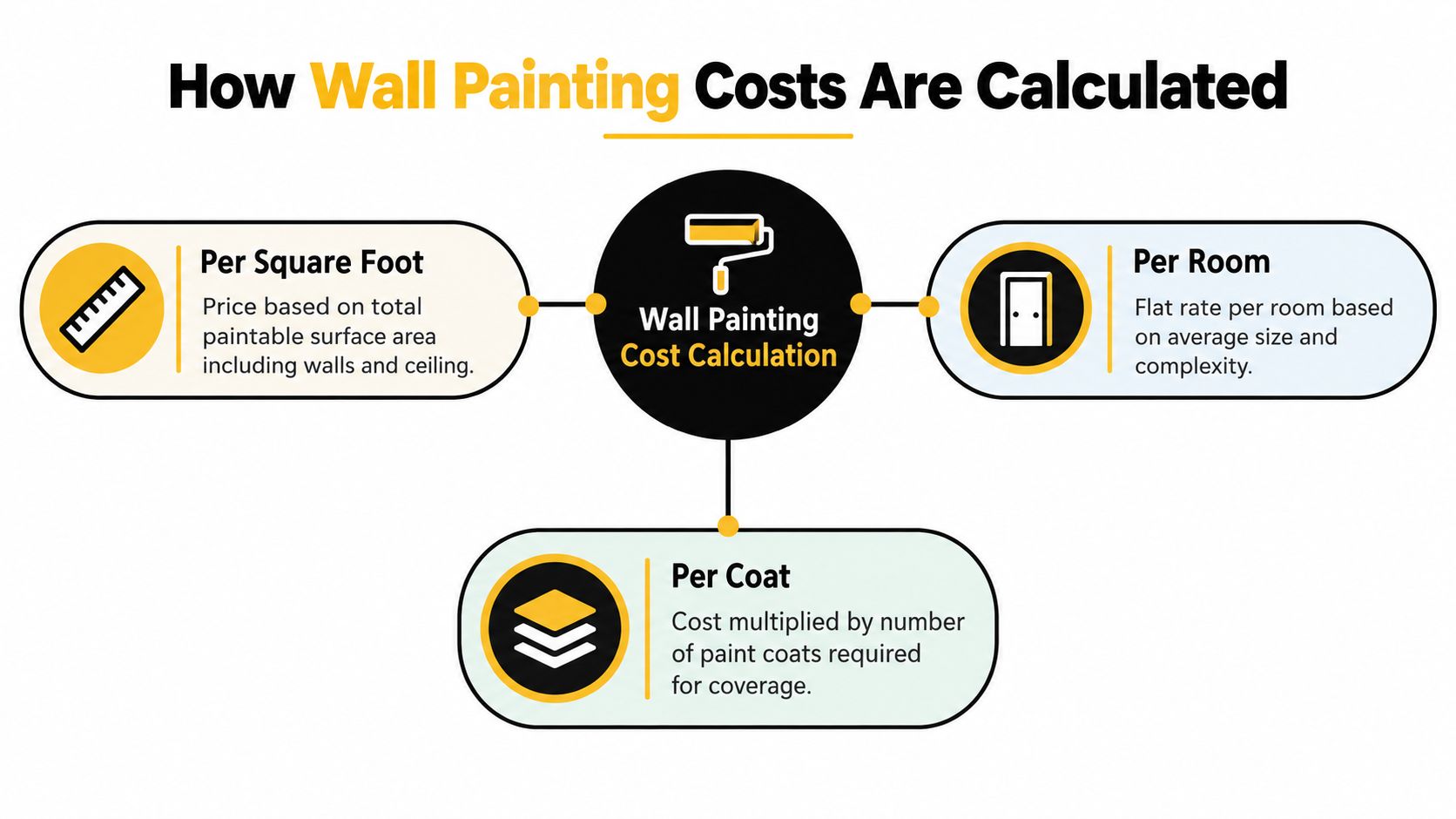
Per square foot
Start with the surfaces that will receive paint. In a rectangular room, measure each wall's width, multiply by wall height, and add the results. This is different from floor area. A compact room can have tall walls, several partitions, doors, or windows that change the paintable total.
Walls-only work commonly runs around $2.75 per square foot, while work that includes ceilings and trim averages about $4.70 per square foot, according to Angi's interior painting estimates. A separate pricing guide places walls-only work around $1.29 to $2.78 per square foot, with broader interior work near $2 to $6 per paintable square foot, depending on preparation and included surfaces (Homewyse's wall painting cost guide).
Those figures are useful starting points, not a local quote. In St. Charles County, a St. Charles living room, an O'Fallon bedroom, or a Lake St. Louis whole-home repaint may price differently because the scope, texture, trim, and access are different.
Per room
Some painters provide a room rate instead of listing every measurement. The rate usually reflects room size, ceiling height, wall condition, furniture access, finish, and expected coat count.
A national calculator estimates a standard 12-by-12 room with 8-foot ceilings at about $758 to $1,160 for two coats on the walls and ceiling when wall conditions are good (CalcSummit's paint calculator). A room is not a fixed pricing unit. A clean bedroom may move quickly, while a kitchen with grease, cabinets, doors, and satin paint requires more setup and cutting in.
Per coat
Coat count changes both labor and material use. One coat may cover when the new color closely matches a sound existing finish. Strong color changes, repairs, porous drywall, and low-hide coatings often call for additional passes.
Paint coverage connects surface area to gallons. Smooth, primed drywall provides a practical planning baseline of about 350 square feet per gallon per coat, while common coverage guidance is around 350 to 400 square feet per gallon (Smarter Squares' paint coverage chart). Unprimed drywall, heavy orange peel, and porous surfaces can reduce coverage to about 200 to 300 square feet per gallon, increasing material and application time.
The useful number isn't the label promise. Plan around the real surface, texture, film thickness, and number of coats.
A professional estimate converts these inputs into labor hours, gallons, surface protection, preparation, and cleanup. That explains why two rooms with similar floor dimensions can have different prices.
Key Factors That Affect Your Final Price
A 12-by-12 bedroom with clear walls may need little more than masking, rolling, and cleanup. A kitchen of similar size may cost more because grease, repairs, cabinets, trim, and a washable finish slow the work. The square-foot calculation starts the estimate, but the line items decide where the total ends.
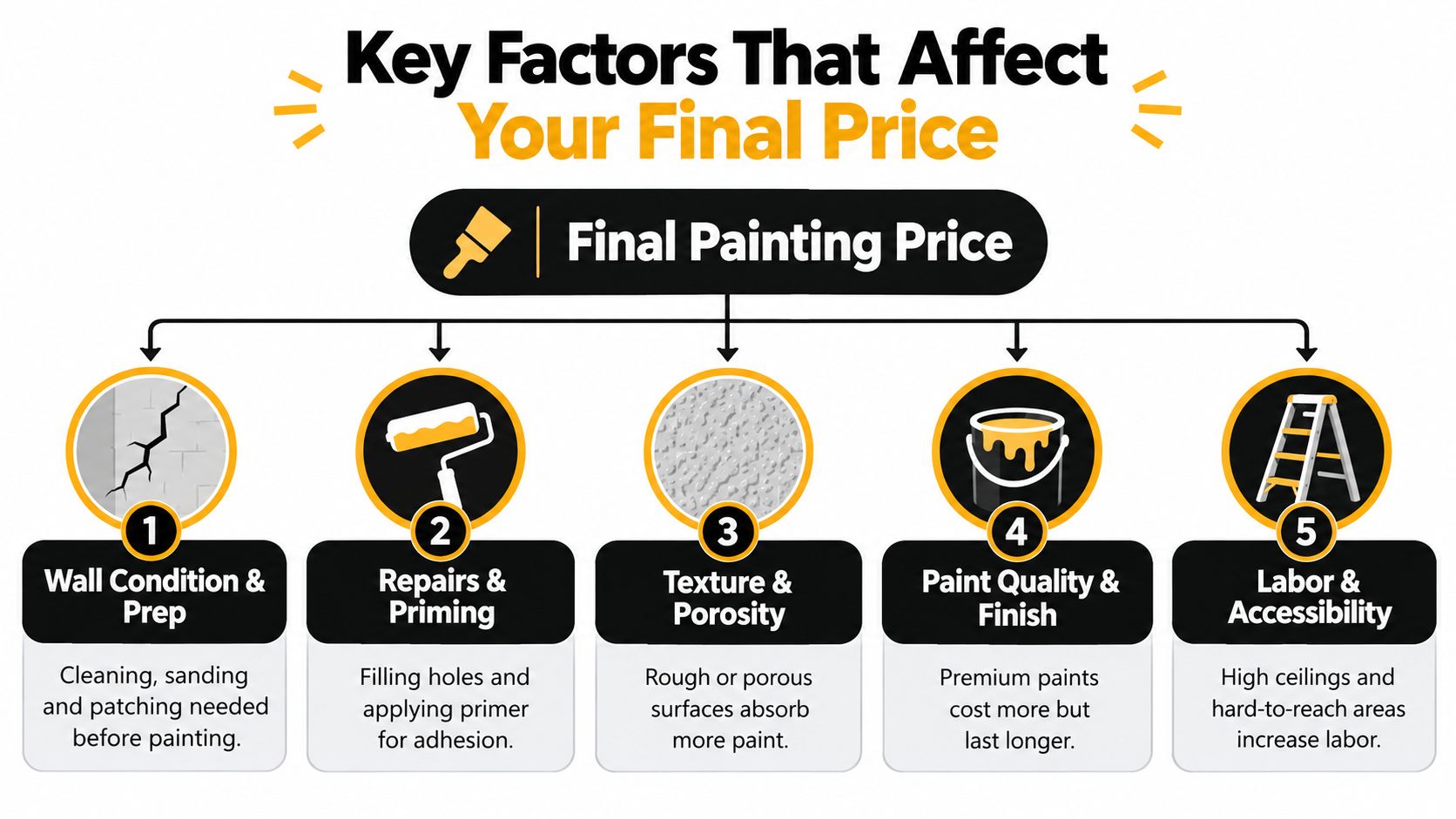
Wall condition and preparation
Clean, smooth walls let a painter move efficiently from masking to rolling. Scuffs, grease, peeling paint, nail holes, settlement cracks, and old patchwork add preparation before the finish can look even.
That preparation may include washing kitchen walls, sanding glossy areas, scraping loose paint, filling holes, feathering repairs, and caulking gaps at trim. These tasks can affect the price more than the color choice because fresh paint reveals ridges, dents, and areas that absorb paint differently.
A useful comparison is laying new flooring over an uneven subfloor. The top material may be high quality, but it cannot hide every problem underneath. Paint works much the same way.
Repairs and primer
Primer is not required for every repaint. It becomes useful when the surface is bare, stained, glossy, patched, or dramatically different in color. Stain-blocking primer can also help with marks that ordinary wall paint does not hide.
Dark lines that follow studs or appear behind furniture need investigation before painting. Dust and soot can collect on colder, poorly ventilated areas, creating “ghosting.” Cleaning the surface and using the proper primer can help prevent those marks from returning (Ranger Painting's guide to ghost marks).
Texture and porosity
Texture affects both material use and labor. Smooth, primed drywall gives the most predictable coverage. Heavy orange peel, unprimed drywall, and porous repairs absorb more paint, so the painter may need additional primer, material, or coats.
This often matters in older St. Charles County homes, newly repaired rooms, and walls covered with patches that absorb at different rates. Without a consistent base, one section may look dull while another looks glossy after drying.
Paint quality and finish
Paint finish also changes the estimate. Flat and eggshell coatings generally cover more area per gallon than satin and semi-gloss, whose formulation and application characteristics often require a lower coverage range (CalcSummit's paint calculator). More material and additional application time can raise the total.
Room use helps determine whether that added cost makes sense. Flat paint can suit ceilings and low-contact formal spaces. Eggshell often works well in living areas. Satin and semi-gloss are easier to clean and commonly fit kitchens, bathrooms, hallways, children's rooms, and other high-wear areas. Pricing guidance also treats paint tier and finish as separate cost factors, so a premium coating may be practical where washability and durability matter (Home Project Calculator's paint cost calculator).
Ceilings, trim, doors, and access
A walls-only estimate covers less work than a full room refresh. Adding ceilings, baseboards, casings, doors, or crown molding expands the painted surface and the protection boundary. Each item also requires careful brushwork, masking, or both.
Access can change the labor line as well. High ceilings, stairwells, built-ins, heavy furniture, and narrow rooms take more time to protect, reach, and move through. A painter pricing a bedroom in St. Charles, O'Fallon, or Wentzville will therefore look beyond floor size and note every surface and obstacle before setting the final price.
DIY Versus Hiring a Professional Painter
DIY painting can make sense when the project is small, the walls are sound, and you have the time to prepare, paint, and clean up carefully. A single accent wall is a different commitment from repainting connected rooms throughout a home.
Your DIY budget includes more than paint. You may need primer, brushes, roller frames, roller covers, extension poles, painter's tape, plastic, drop cloths, sanding sponges, caulk, patching compound, and cleaning supplies. If the surface absorbs more paint than expected, you may also need extra material after the first gallon runs short.
Where DIY works well
A homeowner with basic repair skills may handle light cleaning, small nail holes, and simple walls without difficult access. The work becomes more manageable when furniture can move easily and the new color doesn't require extensive hiding.
The tradeoff is your time. Preparation, cutting in, drying between coats, touch-ups, and cleanup can turn a seemingly simple weekend task into several interrupted days. Mistakes around trim, outlets, ceilings, and flooring may also create rework that wasn't part of the original plan.
Where a professional earns the difference
A professional quote bundles labor, surface evaluation, application technique, material planning, protection, and cleanup. Skilled painters can identify adhesion problems, choose the right primer, control roller texture, and maintain clean lines around trim and fixtures.
Consideration | DIY | Professional painter |
|---|---|---|
Materials | You purchase paint, primer, tools, and protection | Often included in an all-inclusive estimate |
Labor | Your evenings or weekends | Scheduled labor with defined scope |
Preparation | You assess and complete repairs | The scope can identify patching, sanding, and priming |
Risk | Rework and uneven coverage remain your responsibility | Work quality and any warranty terms are defined by the contractor |
Best fit | Small, accessible areas | Multi-room, complex, urgent, or high-finish projects |
Before hiring, ask whether the estimate includes materials, protection, cleanup, and touch-ups. Before choosing DIY, price the supplies and decide what your time is worth.
For busy families, landlords, and sellers in St. Peters, O'Fallon, Chesterfield, or nearby communities, a professional may provide more value when the project has a firm deadline or broad scope. The right choice depends on the condition, access, finish expectations, and schedule, not on the lowest initial outlay.
Sample Estimates for Typical Rooms and Homes
A bedroom repaint may look simple until the quote separates wall area from the work around it. A smooth, empty room can stay near a basic walls-only rate. Repairs, ceiling height, trim, furniture, or a textured surface can move the total higher. Sample figures help set a starting budget, but they do not replace an on-site estimate.
For a useful comparison, apply $2.75 per square foot to walls-only work and $4.70 per square foot when the scope includes walls, trim, and ceilings. These benchmarks come from the Angi's interior painting cost guide. A standard 12-by-12 room with 8-foot ceilings may run $758 to $1,160 for two coats on walls and ceiling when the surfaces are in good condition.
Project Scope | Paintable Area Basis | Estimated Cost Range | What Is Included |
|---|---|---|---|
Small bedroom walls only | Measured wall surface | About $2.75 per sq. ft. | Walls, standard preparation, and the specified coat scope |
Standard 12-by-12 room | Walls and ceiling | About $758 to $1,160 | Two coats on walls and ceiling under good wall conditions |
Large living room walls only | Larger measured wall surface | About $2.75 per sq. ft. | Walls, with price adjusted for repairs, access, and coats |
Kitchen or bath refresh | Walls with durable finish | Often above a basic bedroom scope | More demanding cleaning, masking, and a finish suited to moisture or wear |
Full interior repaint | Walls, trim, and ceilings | About $4.70 per paintable sq. ft. | Broad interior coverage, trim, ceilings, and associated preparation |
Local homes can produce very different totals. In Lake St. Louis, a compact bedroom with smooth, open walls may stay near the simpler end. In Wildwood or Chesterfield, a living room with tall walls, built-ins, stair access, or extensive trim needs more masking and setup. The square-foot rate starts the calculation. The line items determine where the estimate finishes.
Whole-home planning
A whole-home quote follows the same logic, room by room. A national interior project average is around $2,022, with typical totals from about $965 to $3,089. Separate guidance lists whole-house painting at about $9,899, full interior painting around $5,041, partial interior refreshes near $1,051, and a single room around $832 (The Fat Book's painting cost guide).
A 2,500-square-foot full interior repaint is often estimated at around $5,000 or more. That figure reflects the broad scope and paintable surface area, not floor area alone. Ceilings, trim, doors, repairs, and the number of coats can change the result.
For a local reference, review completed work in the 1st Choice Home Repairs painting portfolio, then request pricing from the actual rooms and surfaces included. A room-by-room estimate gives you a clearer comparison than a single figure based only on the home's floor size.
Smart Ways to Save Without Cutting Corners
A lower painting bill usually comes from removing wasted labor, not from skipping preparation. Treat the estimate like a room-by-room checklist. Each item you define early helps prevent surprise charges or unfinished work.
Combine nearby rooms: Painting connected spaces during one visit can reduce repeated setup, masking, protection, and cleanup.
Complete light preparation: Remove wall décor, move small items, wash accessible surfaces, and fill minor nail holes before the crew arrives. Ask the painter first, since poorly sanded patches may need correction.
Match finish to traffic: Choose a washable finish for walls exposed to hands, pets, cooking, or moisture. A less suitable coating may require an earlier repaint and raise the long-term cost.
Compare itemized bids: Have each painter list walls, ceilings, trim, doors, repairs, primer, coats, materials, and cleanup. A lower quote that leaves out preparation does not compare the same scope.
Keep scheduling flexible: If your timeline permits, ask about periods with greater availability. More scheduling room can give you time to compare scopes.
Material costs also affect estimates. Paint and coating input prices remain high relative to the index baseline, so a clearly defined scope matters when you compare bids. Ask whether the quote includes the materials needed for your selected finish and number of coats.
For a larger repaint, discuss payment arrangements before work starts. Homeowners can review financing options from 1st Choice Home Repairs while planning the project. Separating required preparation from optional upgrades helps keep the budget manageable without leaving repairs for a second visit.
Plan Your Project With 1st Choice Home Repairs
A reliable wall-painting budget starts with four questions: How much surface will be painted? What preparation does it need? Which finish suits the room? Which surfaces are included? Once those answers are clear, you can compare a walls-only refresh with a broader project that includes ceilings, trim, doors, and repairs.
1st Choice Home Repairs provides interior painting and drywall services for homeowners in St. Charles County and nearby communities, including St. Charles, O'Fallon, Lake St. Louis, St. Peters, Chesterfield, Wildwood, and Ballwin. The company describes projects through upfront scope, attentive craftsmanship, and consultation around the homeowner's goals and timeline. A consultation can clarify whether the room needs cleaning, patching, priming, one finish system, or a more extensive repaint.
The company also offers flexible financing options for homeowners who want to plan a larger upgrade without treating essential preparation as an optional extra. That matters when a quote includes multiple rooms, damaged drywall, trim, and ceilings rather than a quick coat over otherwise sound walls.
Use the 1st Choice Home Repairs contact page to request a personalized estimate. Provide room dimensions, photos of wall condition, your preferred finish, the surfaces you want included, and your target timeline so the estimator can build a clearer scope from the start.
1st Choice Home Repairs offers interior painting and drywall services with project scopes designed to fit your rooms, surfaces, preparation needs, and schedule. Visit 1st Choice Home Repairs to request a personalized wall-painting estimate for your St. Charles County home and discuss financing options for the work.
Comments